


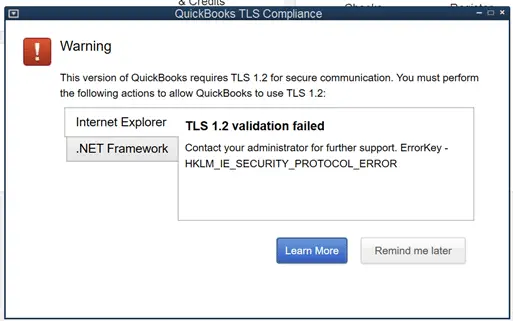
 Are you getting a TLS 1.2 Error After Installing Windows 10 April 2018 Update
ErrorKey – HKLM_IE_SECURITY_PROTOCOL_ERROR
Checking off TLS 1.2 in IE probably wont help but luckily there is a fix available.
- First, close out of your QuickBooks Desktop application.
- Proceed to the second step which is running the TLS 1.2 Readiness tool. This tool helps in updating your system to become TLS 1.2 compliant, so it meets all Windows Operating System, Internet Explorer and .Net requirements. This tool is available from Intuit.
- Finally reopen your QuickBooks Application again and your error should be gone.
Please take note that QuickBooks Desktop 2015 is no longer supported by Intuit. You may receive errors when updating the program and eventually may have other issues.
What is TLS? – Transport Layer Security Protocol
Schannel supports versions 1.0, 1.1, and 1.2 of the Transport Layer Security (TLS) protocol. This protocol is an industry standard designed to protect the privacy of information communicated over the Internet. TLS assumes that a connection-oriented transport, typically TCP, is in use. The TLS protocol allows client/server applications to detect the following security risks:
- Message tampering
- Message interception
- Message forgery
The full specification of the TLS Protocol is available from the IETF website: http://www.ietf.org/rfc/rfc2246.txt.

 The fallout from the WannaCry ransomware attack will likely reach into the billions of dollars according to many estimates. The malware attack largely targeted older Windows XP and some Windows 8 systems along with unpatched newer systems that were within many of the affected businesses. Many of the affected organizations were continuing to run some legacy application that could not run on a newer version of Windows. This of course is a game of risk roulette considering microsoft stopped activly supporting these older systems. WannaCry demanded a relatively small amount of money to recover your information but the hit to the reputation of the organizations that fell victim to WannaCry far exceeds any monetary value.
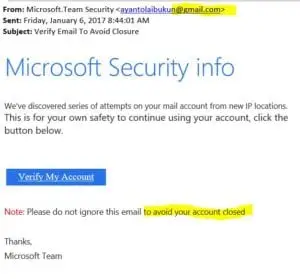 Without spending more than a few seconds you can see this came from a gmail account and also had grammar issues. These are quick identifiers to show they are not legit. Microsoft would never send you a message from gmail. There are also other clues… if you hover over the “Verify My Account” link without clicking it revels a URL to a foreign server not a Microsoft domain.